Post-Construction Dust: The Invisible Threat to Your New Building
Construction is complete, the contractor has handed over the keys, and the building looks ready for occupancy. But there's an invisible problem lurking in every corner, duct, and crevice: construction dust.
Construction dust is far more than a cosmetic nuisance. It's a complex mixture of materials that can damage building systems, degrade finishes, and create serious health hazards if not properly addressed.
What's Actually in Construction Dust?
Construction dust isn't just "dirt." It's a mixture of:
- Silica (from concrete, masonry, and stone cutting) — classified as a known carcinogen by OSHA when inhaled
- Drywall compounds (calcium sulfate and other minerals) — respiratory irritants
- Wood dust (from framing, millwork, and finishing) — allergen and respiratory irritant
- Metal particles (from cutting, grinding, and welding) — can cause metal fume fever
- Adhesive and sealant residues — VOCs that off-gas for weeks to months
- Fiberglass particles (from insulation) — skin and respiratory irritants
- Paint overspray and sanding dust — contains solvents and pigments
This cocktail of particulates settles on every surface, infiltrates every system, and becomes airborne with the slightest disturbance.
The HVAC Problem
The most costly consequence of unaddressed construction dust is HVAC contamination:
How It Happens
During construction, dust enters ductwork through open vents, gaps in duct connections, and unsealed openings. Even when HVAC systems are shut down during construction, dust still settles in ducts, returns, and air handlers.
The Consequences
- Reduced efficiency: Dust-clogged filters and coils force systems to work harder, increasing energy costs by 15-25%
- Premature failure: Dust accelerates wear on fans, motors, and compressors
- Poor air quality: When the system runs, it distributes construction dust throughout the building, causing respiratory complaints, allergic reactions, and sick building syndrome
- Warranty issues: Some HVAC manufacturers void warranties if systems aren't properly cleaned after construction
The Solution
Professional post-construction cleaning must include duct cleaning, filter replacement, coil cleaning, and system testing before the HVAC is placed into regular service.
Surface Damage
Construction dust is abrasive. When people walk on dust-covered floors, the particles act like sandpaper, scratching hardwood, dulling polished concrete, and wearing through floor finishes. This damage is cumulative and often irreversible.
Surfaces at risk:
- Hardwood and engineered wood floors
- Polished concrete
- Stainless steel fixtures
- Glass and mirrors
- Countertops (especially natural stone)
- Painted surfaces
Professional cleaning removes dust without causing additional damage, using appropriate methods for each surface type.
Health Implications
Building occupants who move into improperly cleaned post-construction spaces report:
- Persistent coughing and throat irritation
- Headaches and fatigue
- Allergic reactions and asthma exacerbation
- Skin irritation
- Eye irritation
For medical facilities, schools, and other sensitive environments, these health risks are especially concerning and may trigger regulatory action.
The RBM Dust Elimination Protocol
Our post-construction dust remediation goes beyond surface cleaning:
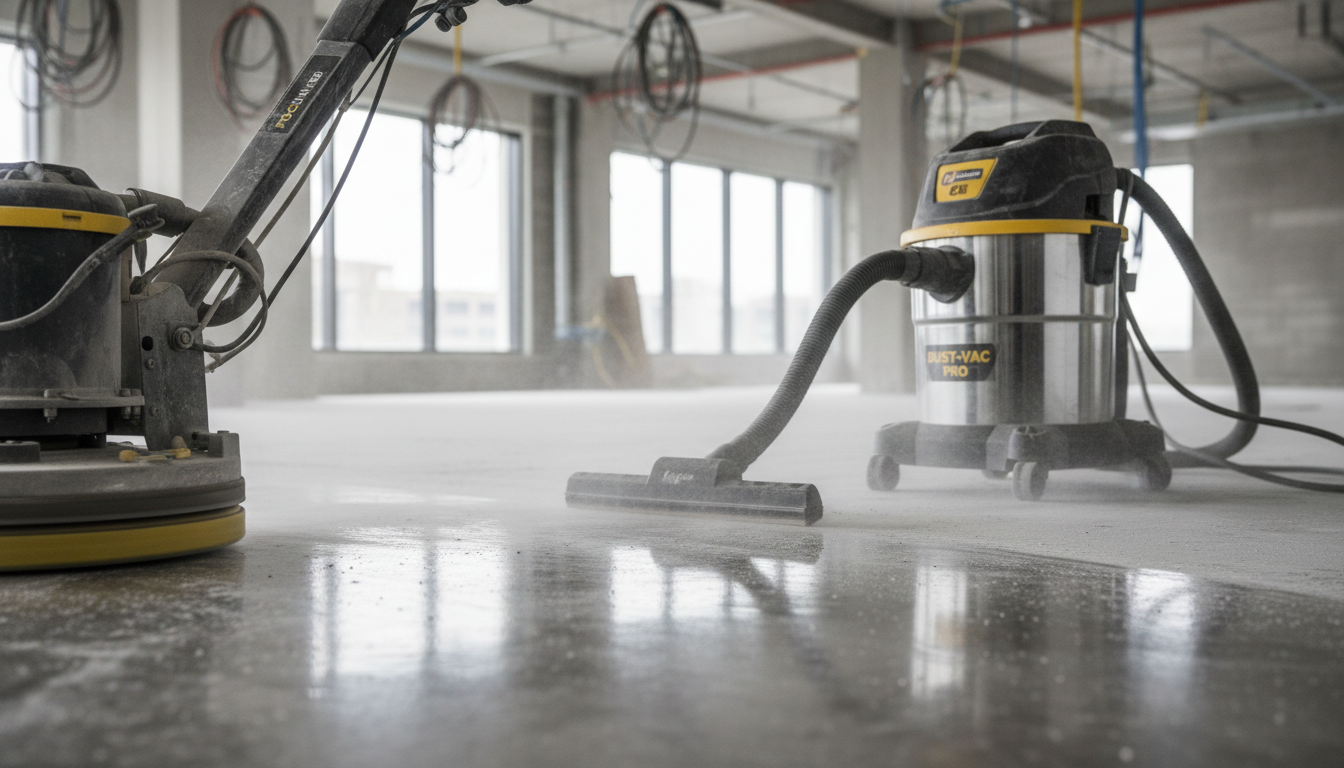
- HEPA Vacuuming: Industrial HEPA-filtered vacuums capture 99.97% of particles down to 0.3 microns
- Damp Wiping: All surfaces wiped with appropriate solutions to capture remaining fine dust
- HVAC Cleaning: Complete ductwork, vent, and system cleaning
- Air Scrubbing: Portable HEPA air scrubbers run during and after cleaning to capture airborne particles
- Surface-Specific Treatment: Appropriate products and techniques for each material type
- Multi-Pass Approach: Construction dust settles continuously; we plan multiple cleaning passes over several days
- Air Quality Verification: Final particle count testing to verify air quality meets occupancy standards
Don't let construction dust compromise your new building. Contact RBM Maintenance for professional post-construction dust remediation that protects your investment and your occupants' health.