Infection Prevention in Medical Offices: Going Beyond the Basics
Medical offices and outpatient clinics may not carry the same intensity as hospital environments, but the infection risks are just as real. Every patient who walks through your door brings potential pathogens—and every surface they touch becomes a possible transmission point.
At RBM Maintenance, we understand that medical office cleaning requires a fundamentally different approach than standard commercial cleaning. Here's how to build an infection prevention cleaning program that truly protects your patients and staff.
Why Standard Commercial Cleaning Falls Short
Standard commercial cleaning focuses on appearance—floors look clean, surfaces are dusted, trash is removed. But in a medical environment, looking clean and being clean are two very different things.
The gap includes:
- Disinfectant selection that may not be effective against healthcare pathogens
- Insufficient dwell times (spraying and immediately wiping provides little disinfection)
- No color-coding system to prevent cross-contamination
- Lack of training in bloodborne pathogen protocols
- No documentation or audit trail for compliance
The Medical Office Infection Risk Profile
Waiting Rooms
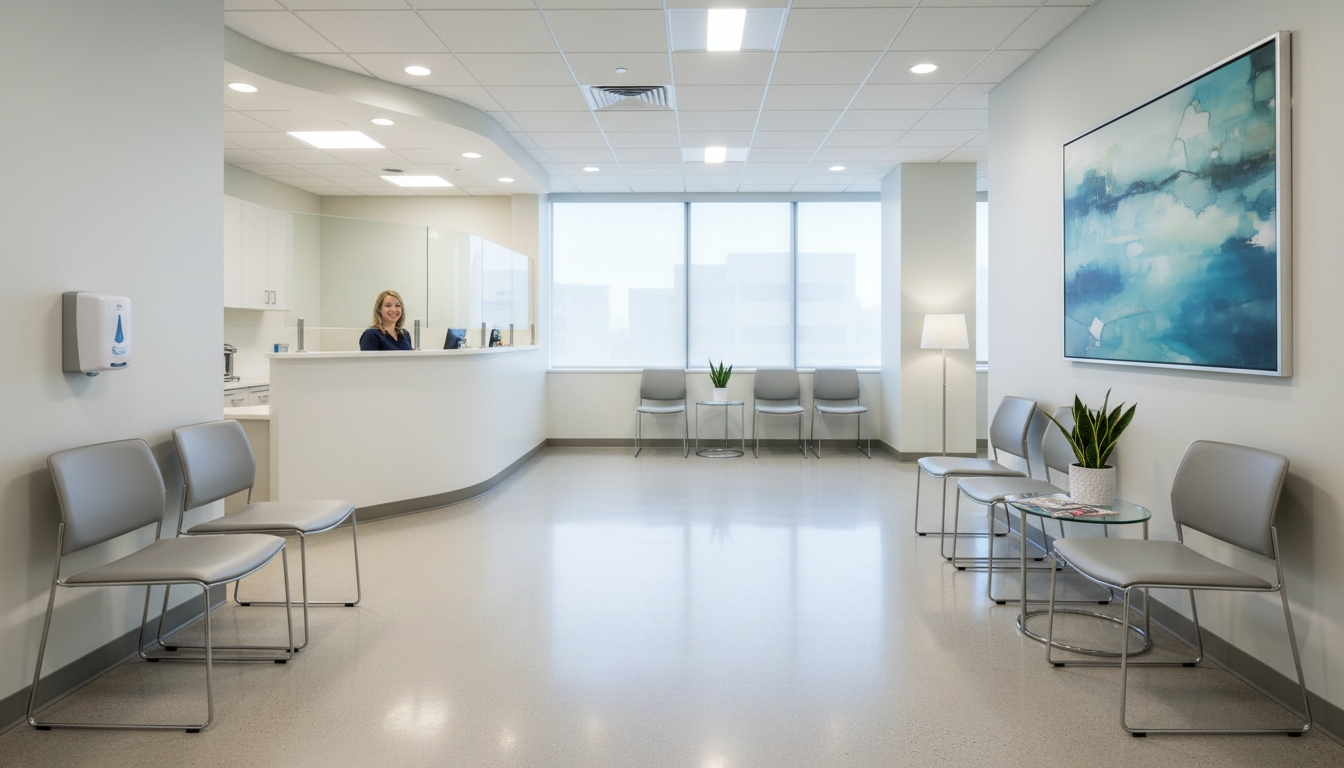
Patients with infectious conditions sit in the same chairs, touch the same magazines, and breathe the same air as immunocompromised patients. Waiting rooms require frequent high-touch disinfection throughout the day.
Exam Rooms
Between patients, exam rooms need thorough disinfection—not just the exam table, but door handles, light switches, countertops, chairs, and any equipment the provider or patient touched.
Restrooms
Medical facility restrooms see higher-risk use than commercial restrooms. Specimens, handwashing compliance, and patient vulnerability all elevate the importance of thorough restroom sanitization.
Administrative Areas
Reception desks, sign-in devices, pens, and payment terminals are touched by every patient and represent significant transmission risk.
Building an Effective Medical Office Cleaning Program
High-Touch Surface Protocol
Identify every high-touch surface in your facility and establish a disinfection schedule:
- Every patient turnover: Exam room surfaces, equipment, and door handles
- Multiple times daily: Waiting room chairs, reception counter, sign-in devices, restroom fixtures
- Daily: Administrative surfaces, common area furniture, break room
Proper Disinfectant Selection
Medical offices should use EPA-registered, hospital-grade disinfectants with demonstrated efficacy against:
- MRSA and other antibiotic-resistant bacteria
- Norovirus and other viral pathogens
- Influenza
- C. difficile (requires specific sporicidal products)
- SARS-CoV-2
Dwell Time Compliance
The most common disinfection failure is insufficient contact time. Most hospital-grade disinfectants require 1-10 minutes of wet contact time to achieve full efficacy. RBM trains staff to maintain proper dwell times and uses products with practical wet times for healthcare environments.
Cross-Contamination Prevention
- Color-coded microfiber systems for different areas
- Single-use or properly laundered cleaning cloths
- Separate mop heads for restrooms, clinical areas, and common spaces
- Glove changes between areas
Compliance Documentation
Healthcare cleaning must be documented:
- Cleaning logs with dates, times, and staff signatures
- Product usage records showing EPA-registered products
- Training records for all cleaning staff
- Quality audit results and corrective actions
- Incident response documentation
Special Considerations
Bloodborne Pathogen Compliance
OSHA's Bloodborne Pathogens Standard applies to any facility where blood or other potentially infectious materials may be present. RBM staff are trained in proper exposure response and cleanup procedures.
Patient Privacy (HIPAA)
Cleaning staff in medical facilities may encounter protected health information. RBM staff receive HIPAA awareness training and understand the importance of patient privacy.
After-Hours Cleaning
Most medical office cleaning occurs after patient hours to avoid disruption. RBM coordinates schedules to ensure thorough cleaning without interfering with clinical operations.
Your patients trust you with their health—and that trust extends to your facility's cleanliness. Contact RBM Maintenance for a medical office cleaning program designed for infection prevention, not just appearances.